
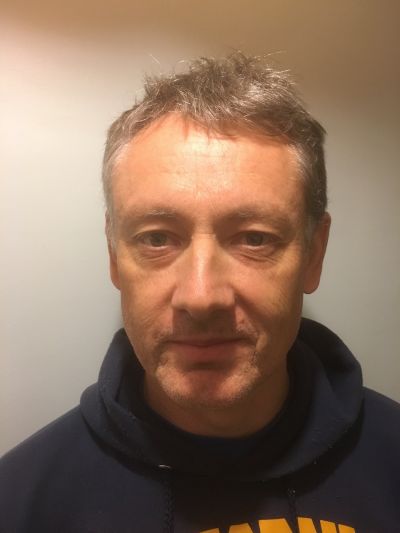
Trevor Matthews
The University of Adelaide
I obtained my Honour’s Degree in Computer Systems Engineering in 1992, after which I worked as a software engineer undertaking research, simulation, and also developed electronic training tools for multichannel acoustic signal processing and classification. We developed multiple system/concept demonstrators for training systems and operational systems that took multichannel acoustic signals and provided close-to-real time frequency and broadband analysis. After some time in this industry, my career took a left turn and I started work for SA Ambulance Service as a paramedic. For the last several years, I have supported my management team with database administration and analytics to provide data to support our workload and work practices.
I have an interest in operational research and using the data available within the health network to provide decision support tools to my clinical and communications room colleagues. Hence in 2019, I started a master’s degree in philosophy, undertaking development of some support tools for ambulance dispatch.
Can you give me a quick overview of the type of mathematics you are studying and its potential impacts for the broader community (how would you explain your work and studies to friends who don’t study maths)?
My research question is investigating whether we can make better dispatch decisions if we know something of the patient’s prior history, with respect to treatments and attendances in the past by the Ambulance Service. Currently, ambulance dispatch (at least in our service) is unable to review an individual’s prior history with respect to contact with the Ambulance Service. We can determine the attendance rate to a specific location, but not to an individual person. If this were possible, we might be able to change our dispatch decisions using the previous attendance history to that individual, and what we did for them in the past.
How did you get into mathematics/statistics/data science? Was there someone or something that inspired you to this field?
I describe myself as a scientist by inclination, an engineer by education and a clinician by career. I’ve always wanted to know how and why something worked. The concept of taking big data, which my Ambulance Service has but doesn’t use very effectively, and leveraging the insights contained within it to provide better services to the community is something that I’m passionate about.
As I get older, I am also aware that I will possibly get to the point where I am physically unable to do my primary role at work. By developing my secondary interest, I hope to be able to still provide benefit to the people and visitors of my state who need my clinical skills, but provide benefit to them in a different way.
You received a scholarship to attend AMSI Winter School 2021. How important was this in terms of your ability to attend, fully participate in the program and meet others in the same field?
I am undertaking my research as an unfunded candidate – I do not have a scholarship or receive financial benefit from my employer to undertake my study. I also needed to take time off from work to fully participate in the Winter School. The scholarship allowed me to not have to think about the financial cost of this course when considering whether I would apply to the program.
Winter School is designed to give students a deeper understanding of their area of research and expose them to others working in different fields/industries. What was the most valuable part of the program for you? Was it the course content or the people you met? Do you have new ideas for your work/research or see it in a new light? Or perhaps it has given you ideas to work in industry?
It’s hard to describe my most valued aspect of the winter school. As this school was focussed on Statistical Data Science, it was centred around the focus of my research. Techniques discussed in the school were topics that I’d heard about, but not had much exposure to before attendance.
Saying that, it was genuinely interesting to hear the presentations from other participants. To hear about the depth and variation of environments and research questions which were using big data showed me the breadth of the field and the opportunities available out there. As it happens, I struck an issue in my next research step which I know someone else has, or is in the process of dealing with, in another field. As a result of participant seminars, I’m planning to contact that participant for some background information about possible approaches to the issue.
Winter School was held as a virtual event for the first time in 2021. What was the biggest positive from your point of view of holding it in this format and/or the biggest challenge?
The ability to virtually hold the school meant that I was able to attend from my home, which given that there was a significant birthday within my family meant I could attend both!
In seriousness though, the extra days required to travel to/from the school, plus the cost (and ignoring the eventual lockdowns that happened across Australia at the time) would have made the decision to travel to the school more difficult. It was easier the first week, when I could choose to telecommute from home or uni depending on what the rest of my family was doing. What I missed was the ability to interact face to face with other students and gain better networking opportunities that could have occurred if we had all been at the school together.
What advice would you give to someone who is considering applying for Winter School in 2022? How would you describe the conference to them?
I would wholly recommend that anyone who has a research interest which aligns with the topics of a winter school to seriously consider attending. I found that the school gave me a good primer on several statistical techniques which I was aware of but didn’t really understand. The lecturers were knowledgeable and approachable, and there was a good attempt at networking and social events even though we were not able to travel.
Where do you want you the mathematical sciences to take you? Where do you see yourself in five or ten years’ time?
I’m hoping that my research qualification will enable me to provide useful insights for my colleagues at work. We do not yet have a large research arm at work, unlike similar agencies in other states. The other issue we currently face is a lack of clinical experience within our analysts who provide our reporting. To have a clinician with the qualifications and experience to essentially translate the wishes of our clinician’s and aid our data custodians is a niche which I hope to be uniquely qualified to fill.
I’m hoping that my unique set of skills will allow the Ambulance Service to leverage our data to provide better, more timely insights which will flow onto better care to those who have the misfortune of needing our services.
Any other feedback/comments you would like to provide on the AMSI scholarship or AMSI Winter School 2021?
I am very thankful for the scholarship to attend the Winter School, it has increased my researcher network, and improved my understanding of some techniques which could become useful as I further my statistical career. I’d like to thank the support team who helped me try to get a local hub off the ground. Even though they were busy with the organisation of the event, they still occasionally made contact during the fortnight to make sure that the format was working well.