
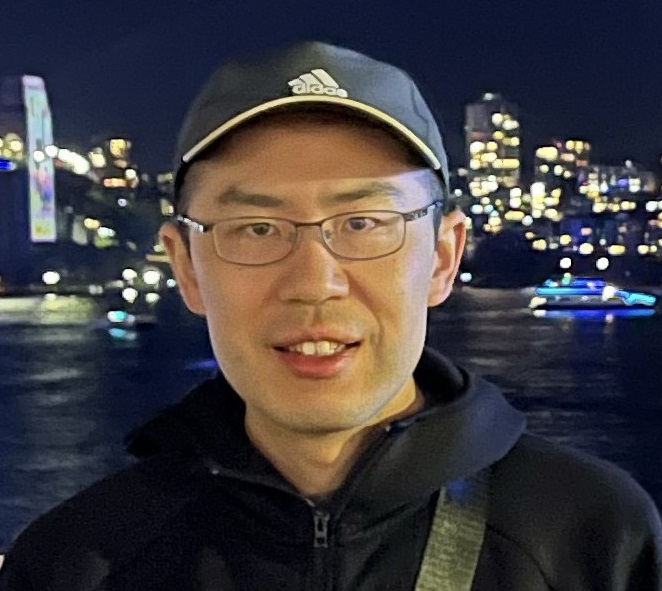
Wenjie Sun
The University of Sydney
I’m a postgraduate student affiliated with the business analytics department at University of Sydney business school. My current main research area is the optimization under uncertainty like the robust optimization.
Give me a quick overview of the type of mathematics you are studying, and/or the aims of your research and its potential applications/outcomes (how you would explain your work and studies to friends who don’t study maths?)
I’m working on the optimization under uncertainty. More specifically, my research mainly focuses on the robust optimization and its application in the group testing problem. The main purpose of group testing problem is to minimize the test numbers in detecting defective and non-detective items by designing the corresponding group testing plan. Due to the uncertainties of the unknown state of items, we propose a two-stage robust optimization approach to dealing with the uncertainties involved in jointly designing groups and certifying items.
How did you get into the mathematical sciences? Was there someone or something that inspired you to this field?
I’m quite interested in the mathematical sciences when I started my university major in Operations Research. The wonderful integration between the theory and practice draws my attention to this new area because I’m keen on the quantitative approach to solving the real-world problem. It’s the famous book, Introduction to Operations Research, that leads me to this new area.
Winter School is designed to give students a deeper understanding of their area of research and expose them to others working in different fields/industries. Tell me about your Winter School experience. What was the most valuable part of the program for you?
I enjoy the winter school experience of decision making for the better future. For example, I know how the mathematics optimization can contribute to the sustainable development goals (SDG) by aligning objectives with SDG targets and adding sustainability constraints. I also explore other courses like planning and scheduling in logistics and supply chains.
What was your main take away/s from AMSI-MATRIX Winter School? Something you learnt? A connection you made? Do you have new ideas for your work/research or see it in a new light?
AMSI-MATRIX Winter School provides me with opportunities of knowing the impact of mathematics on the sustainable world. I get to know that optimization is not just about how to design but about what to optimise for. In the meantime, I also make many new friends from other Australian Universities. They help me expand my horizon about how we can solve the real-world challenges like healthcare, transportation and logistics using optimization tools.
You received a grant to attend AMSI-MATRIX Winter School. How important was this in terms of your ability to attend, fully participate in the program and meet others studying in similar fields?
The travel grants for flights and accommodation to attend AMSI Winter School are important for my full participation because of my limited financial budget. In addition, networking dinner enables me to communicate with other students about our research experience and knowledge we learn from the lecture.
What advice would you give to someone who is considering applying for Winter School? How would you describe the conference to them?
I would like to recommend this winter school to my colleagues because they cannot only learn the new knowledge but also make new friends by attending this winter school.
Where do you want the mathematical sciences to take you? Where do you see yourself in five, ten years time?
My goal is to solve real-world problems and publish influence papers. Over the next five to ten years, I plan to solve the real-world problem with my mathematic skill.
Any other feedback/comments you would like to provide on the travel grant or AMSI-MATRIX Winter School?
I quite appreciate the support from AMSI Winter School and look forward to continued collaboration in the future.