
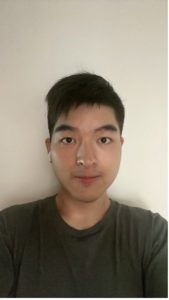
James Koh
The Hong Kong University of Science and Technology
I began my undergraduate studies in physics, but as I was exposed to more rigorous mathematical reasoning, I found myself increasingly drawn to pure mathematics. What started as an appreciation for the precision of proof gradually became a genuine attachment to the subject itself. Today, my mathematical interests lie primarily in analysis and geometry, where I enjoy the way rigorous local arguments can reveal deep global structure. I am currently studying curvature and topological rigidity — investigating how certain curvature conditions on a space can constrain, or even completely determine, its overall topological shape. I am still relatively new to mathematical research, having only recently begun moving from coursework into open-ended problems, but this newness is part of what makes it exciting: every small result feels like a genuine discovery rather than an exercise with a known answer. I look forward to deepening my understanding of geometric analysis and to contributing, even in a small way, to the broader effort of understanding how curvature shapes the spaces we study.
What are you studying, and what does your research aim to do?
My research sits in an area of pure mathematics called differential geometry, and specifically in the interplay between curvature and topology. Imagine a smooth, curved shape — a sphere, a donut (a torus), or something with many more holes and handles. Two very different-sounding properties of such a shape are its curvature (how it bends locally, at every single point) and its topology (its overall global shape — roughly, how many holes it has, and what other shapes it can and can’t be continuously deformed into without tearing). A classic question in geometry is: if I tell you a space is curved in a certain way — say, positively curved everywhere — how much does that restrict its possible overall shape? That is the question of topological rigidity: certain curvature conditions turn out to be so restrictive that they force a space into a very short list of possible shapes, even though there’s no obvious reason a purely local condition like curvature should say anything about a global property like topology. My work looks at some of these curvature conditions and tries to pin down exactly how much rigidity they force. Beyond the pure curiosity of it, this kind of question connects to physics — general relativity models spacetime itself as a curved space — and more broadly to how we understand the shape of complex spaces in general.
How did you get into the mathematical sciences?
For me, mathematics has always felt like an elaborate logic puzzle — the kind of intellectual challenge where a clean argument gives the same satisfaction as solving a really good riddle. What actually pulled me from physics into pure mathematics, though, was a close friend. He was set on studying mathematics and asked me to work through material with him, and that shared effort ended up being the real spark: seeing how much he enjoyed the subject, and starting to work through problems together, is what got me started down this path.
Tell us about your Winter School experience.
Winter School gave me a rare opportunity to look beyond my own narrow corner of mathematics and see what people in other areas — and in other fields altogether — are working on, which I’m very grateful for. It also gave me a window into the kinds of industry opportunities available to people with a mathematical sciences background, which has been genuinely useful as I think about my own career development. If I had to pick the single most valuable part, though, it would be the people: getting to meet so many talented researchers working in fields close to my own, and learning an enormous amount from the lecture series.
What was your main takeaway from AMSI Winter School?
The connections I made were probably my biggest takeaway — meeting other early-career researchers and forming relationships I expect will continue well beyond the program itself. Just as importantly, Winter School gave me the chance to step outside my usual day-to-day focus on my own narrow research question and engage with something else entirely: other people’s problems, other people’s ways of thinking, and other paths a mathematical sciences background can lead to.
What surprised you most about Winter School?
A few things caught me off guard. The view from UQ was honestly stunning, and I didn’t expect the campus itself to leave such an impression. I was also struck by how genuinely nice everyone was — discussions during the tutorials were relaxed, engaging and fun rather than intimidating, and the lecturing professors were unfailingly patient, happily answering questions even when I worried they might be too basic.
Why does in-person communication matter at an event like this?
There’s something about being in the same room as someone that simply doesn’t come through over Zoom — you can read the room, feel the energy, and pick up on all the small cues that make a conversation actually flow. In-person events let you interact naturally, have fun, and build real rapport with people in a way that online meetings, however well-run, tend to flatten out.
How important was the travel grant to your ability to attend?
The grant was essential — without it, I honestly would not have been able to attend. Airfare from Hong Kong is expensive relative to the day-to-day cost of living here, and that gap alone would have been a real barrier. The funding didn’t just get me there; it meant I could participate fully in the program and take the time to properly get to know others working in similar fields, rather than worrying about cutting the trip short to manage costs.
What advice would you give someone considering applying?
My advice would be simple: come with an open mind and make an effort to talk to people. Being at Winter School was genuinely one of the best experiences I’ve had — everyone was cheerful, welcoming and easy to get along with, and we had a great time together. On the academic side, the program is also full of people happy to help each other work through concepts they’re stuck on, so don’t be afraid to ask questions, even ones that feel basic.
Tell us about a moment that changed a preconceived idea about your field.
Before Winter School, I think I quietly assumed pure mathematics research was a fairly solitary pursuit — long stretches of working alone on a problem, with collaboration as the exception rather than the rule. Talking with other students and researchers over the course of the program changed that. I heard again and again how much real progress in people’s work came out of casual conversations — someone mentioning an idea from their own area that turned out to be exactly the missing piece in someone else’s problem. It made me see my own work on curvature and rigidity a little differently: not as something to solve in isolation, but as part of a much wider conversation that I’m only just beginning to be part of.Where do you want the mathematical sciences to take you?
I’m still keeping my options open between industry and academia. Right now I’m drawn to the idea of continuing in research, ideally staying close to geometry and analysis, but I’m also conscious that a mathematics background opens doors in industry that I’d be foolish to ignore, especially given some of what I saw at Winter School. In five years, I’d like to be well into a research career; in ten, I hope to have a clearer sense of which of these two paths — or perhaps some combination of them — is the right fit for me.
Any other feedback on the travel grant or AMSI Winter School?
Just gratitude, really. This grant made an experience possible that I don’t think I would have had access to otherwise, and I’m genuinely thankful to AMSI, and to whoever reviews these applications, for making it happen. I’d wholeheartedly encourage the program to keep supporting students like me who wouldn’t otherwise be able to make the trip.