
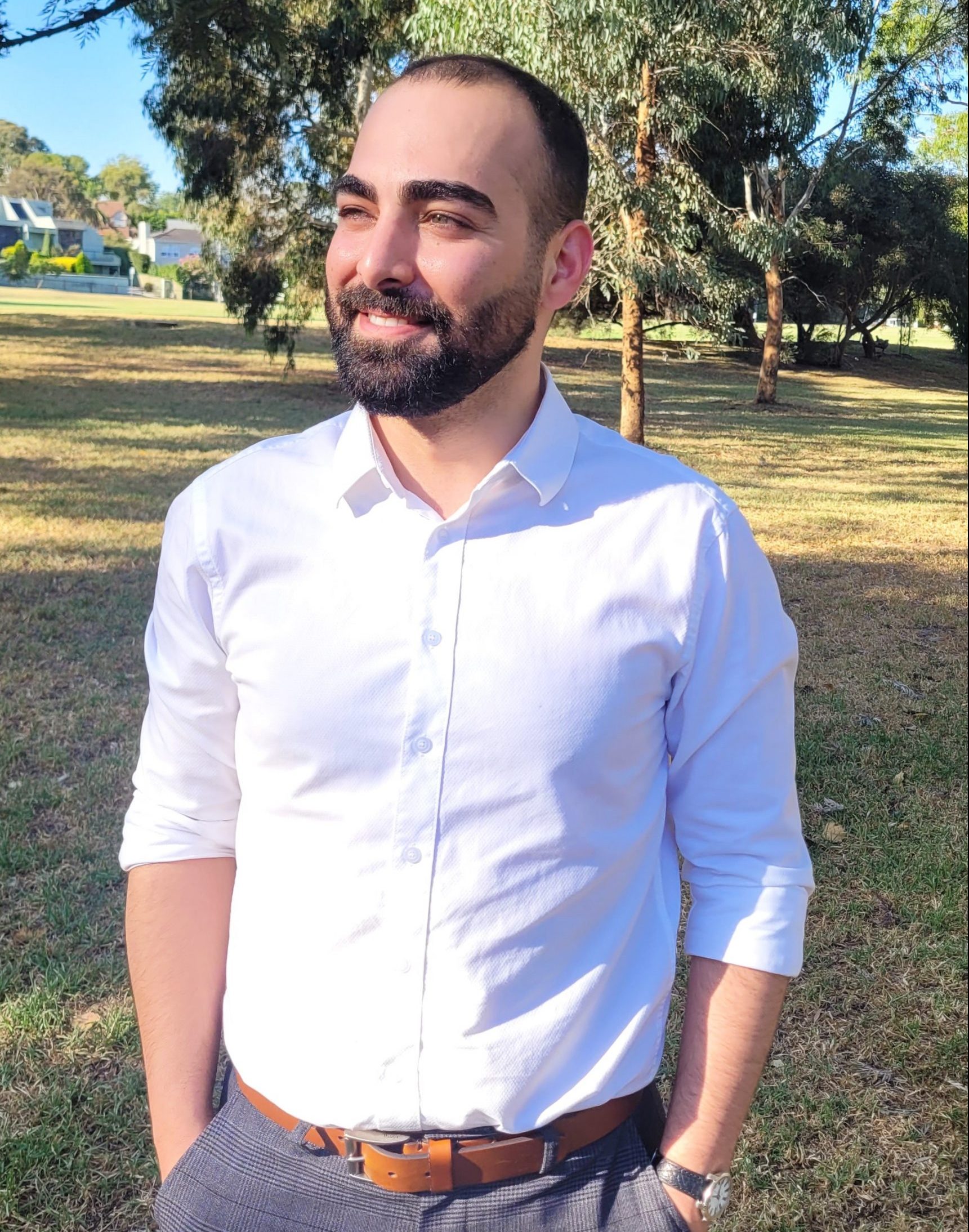
Ashkand Eskandari
Monash University
I am currently an Honours Mathematics student majoring in Applied Mathematics, with a strong passion for Neural Networks, Operations Research, and Computational Mathematics. My expertise includes numerical analysis, optimization, and mathematical modeling, and I have a multidisciplinary background in Physics and Mechanical Engineering, which allows me to approach complex problems from multiple perspectives. With a deep interest in leveraging mathematics and programming to solve real-world challenges, I actively explore machine learning, data science, and algorithm development. My research focuses on optimal classification trees in machine learning, particularly addressing integer programming challenges to enhance accuracy and performance on large datasets. Driven by curiosity and a commitment to continuous learning, I constantly seek opportunities to expand my knowledge and contribute to innovative projects at the intersection of mathematics, computation, and real-world applications.
Can you give me a quick rundown about the type of mathematics you are studying and its potential impacts for the broader community (think how you would explain your work and studies to others who don’t study maths)
My field of study is optimization and research, with a current focus on classification trees in machine learning. Optimization plays a crucial role in improving decision-making processes, from logistics and resource allocation to machine learning and artificial intelligence. By working on classification trees, I aim to enhance predictive models, making them more efficient and interpretable for real-world applications in healthcare, finance, and beyond.
How did you get into mathematics/statistics/data science? Was there someone or something that inspired you to this field?
I’ve always been drawn to mathematics, but my journey into the field was not a straight path. I initially studied physics, then transitioned to mechanical engineering before ultimately pursuing mathematics, specifically applied mathematics. It was only when I discovered optimization that I realized this was my true passion—it combines mathematical theory with practical problem-solving, which I find incredibly fulfilling.
You received a Travel Grant to attend AMSI Summer School 2025. How important was this in terms of your ability to attend, fully participate in the program and meet others studying in similar fields? Do you think it was an advantage to attend the program in-person?
Having accommodation and essentials covered by AMSI was a huge relief—it allowed me to focus entirely on learning and engaging with other mathematicians. Attending in person was invaluable, as it facilitated deeper discussions, collaborations, and networking opportunities that wouldn’t have been as effective in a virtual format.
What was the most valuable part of the program for you?
The most valuable aspect was meeting people from diverse mathematical backgrounds. Mathematics is such a vast field, and interacting with others gave me a broader perspective on its different applications and research areas. These discussions and connections expanded my understanding of the subject and opened new avenues for exploration.
In the long-term, what do you think are the benefits of having attended Summer School?
Attending Summer School has significantly expanded my professional network, connecting me with peers, mentors, and experts from across Australia. The advanced coursework and collaborative environment have strengthened my research skills and academic profile, positioning me for future opportunities in both academia and industry. The relationships built during this program will undoubtedly be beneficial in the long run.
Summer School included a special Careers Day program which aims to help give students an idea of the kinds of career paths available to maths graduates in industry and private sector research areas. Do you feel better equipped to explore career options in the mathematical sciences after attending AMSI Summer School?
Absolutely. The Careers Day program was instrumental in showcasing the diverse career paths available to mathematics graduates. Hearing directly from industry professionals and researchers provided clarity on potential career trajectories, as well as the skills and expertise that employers value. It was particularly insightful to interact with company representatives who guided us through industry opportunities and expectations.
What advice would you give to someone who is considering applying for Summer School in 2026? Should they apply and why?
I would strongly encourage anyone studying mathematics to apply. It is an incredible opportunity to gain advanced knowledge, meet like-minded peers, and build professional connections. The experience is not just academically enriching but also personally rewarding.
What are your current career ambitions in the mathematical sciences sector?
I plan to continue in higher education by pursuing a PhD, after which I aim to work in industry, specializing in optimisation and operations research.
How did connecting with the community at AMSI Summer School support your experience?
The relationships and collaborations formed during the program have provided ongoing support, mentorship, and potential future collaborations. I was truly impressed by the quality and effectiveness of the program—it fostered a strong sense of community and intellectual exchange that I deeply appreciate.
Any other feedback/comments you would like to provide on the AMSI Travel Grant or AMSI Summer School 2025?
I believe the AMSI Summer School should be a compulsory experience for all mathematics students across Australia. The knowledge, exposure, and networking opportunities it provides are invaluable, and it plays a crucial role in strengthening Australia’s mathematical sciences community.