
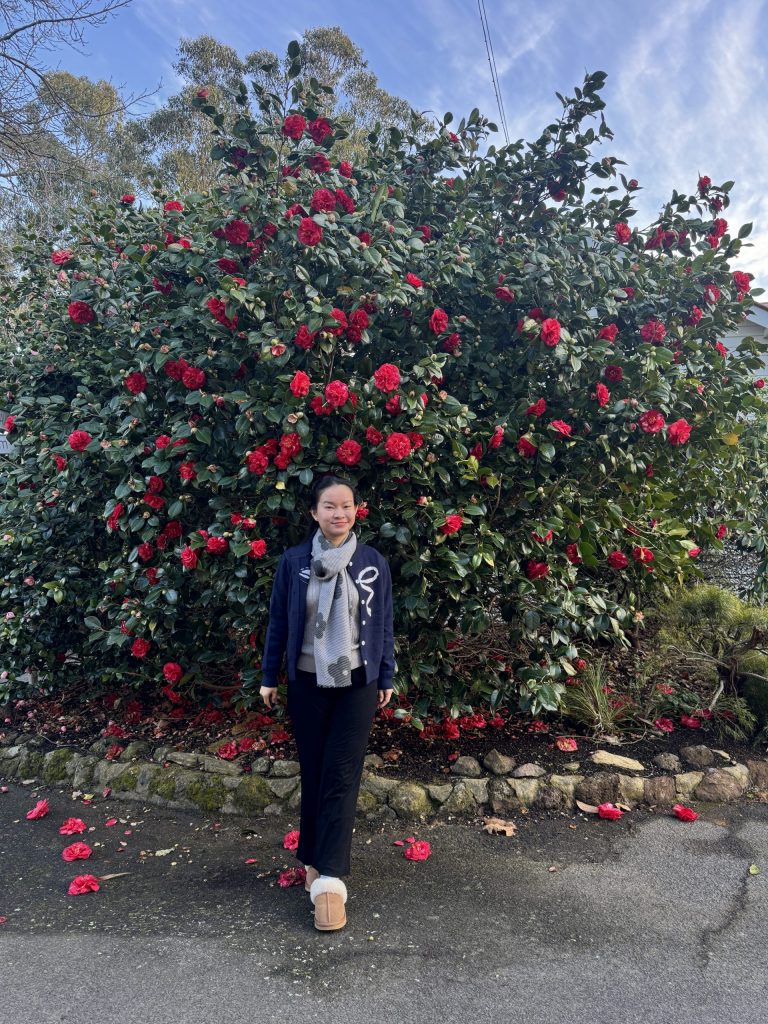
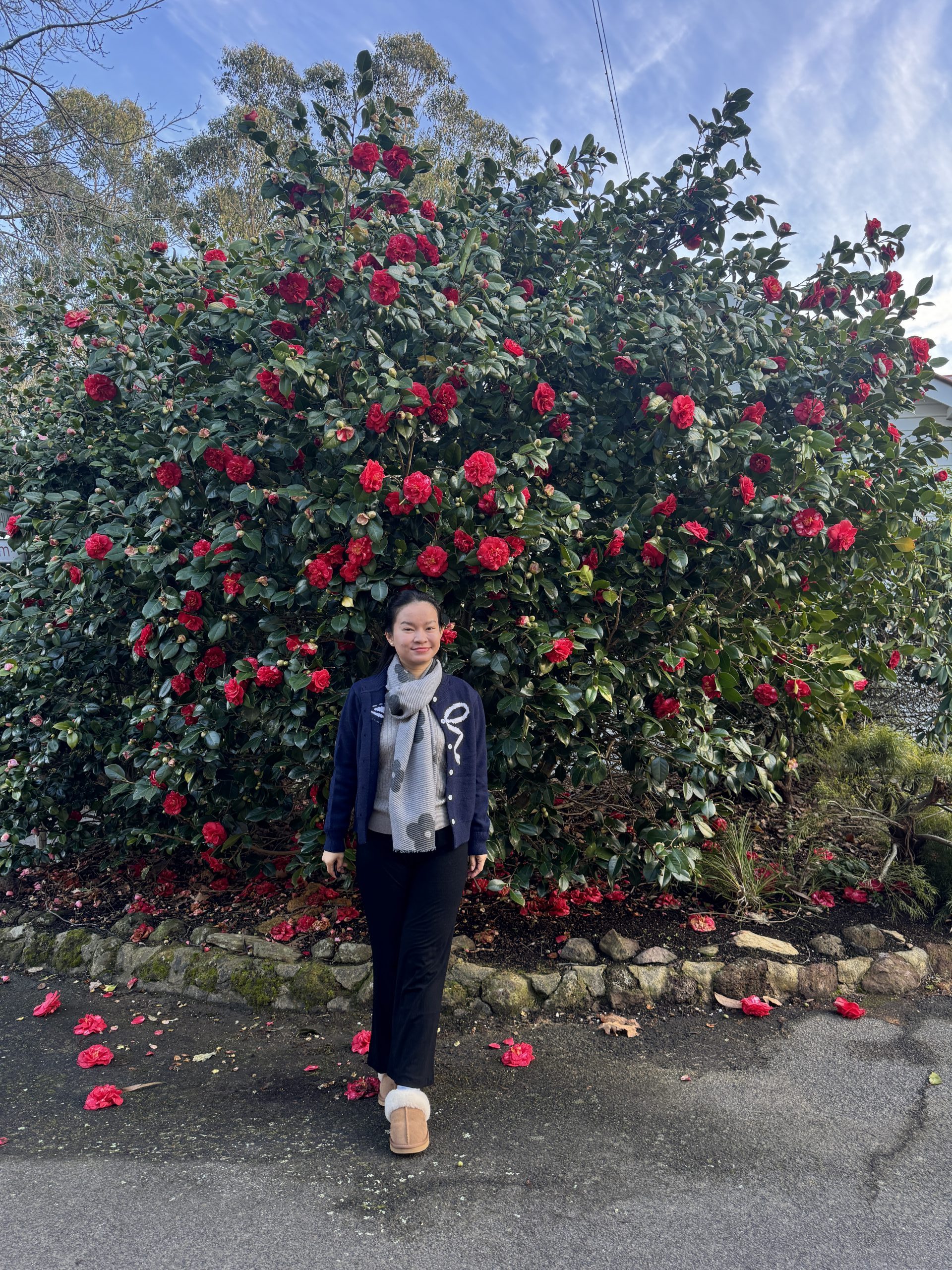
Monita Chanroath
Royal Academy of Cambodia
I am Monita Chanroath, a mathematics educator and researcher from Cambodia. I completed my Master’s degree in Mathematics Education at Khon Kaen University, Thailand, where my thesis focused on exploring teachers’ beliefs in blended learning classrooms. My research interests include teacher professional development, lesson study, STEM education, and the integration of technology in mathematics learning.
I have presented my work at international conferences such as ICME-15 in Sydney, the PME Regional Conference in Thailand, and the AMSI-MATRIX Winter School in Australia. These opportunities have allowed me to share Cambodian perspectives while learning from global practices in mathematics education.
In Cambodia, I actively work with the Cambodian Mathematical Society to promote mathematics learning nationwide. I organize international and national competitions, including the SUKEN Test, Caribou Contests, and CASIO Scientific Calculator competitions, which provide students with opportunities to challenge themselves and build confidence in mathematics. I also teach part-time at universities and support training programs for teachers to strengthen STEM education.
I am passionate about empowering teachers and inspiring students through mathematics, and I aim to contribute to building a stronger mathematics education community in Cambodia and
Give me a quick overview of the type of mathematics you are studying, and/or the aims of your research and its potential applications/outcomes (how you would explain your work and studies to friends who don’t study maths?)
I study how teachers think about teaching mathematics and how their beliefs shape the way they teach. My research looks at how blended learning (combining online and classroom teaching) can support both teachers and students. The aim is to find better ways for teachers to design lessons that make mathematics more engaging and meaningful, not just about memorizing formulas.
In practice, this means helping teachers feel confident using technology alongside traditional methods, so students can learn in more flexible and interactive ways. The outcome I hope for is that students in Cambodia and beyond will not only improve their maths skills but also enjoy learning and see its connection to real life.
My work also links to organizing math competitions and training programs, which give students opportunities to challenge themselves and build confidence. Altogether, my research and activities aim to make mathematics education more inspiring, inclusive, and practical for the future.
How did you get into the mathematical sciences? Was there someone or something that inspired you to this field?
I first became interested in mathematics because of my father, who has dedicated his life to mathematics education in Cambodia. Growing up, I was surrounded by his passion for teaching and organizing programs that helped students discover the joy of learning maths. His dedication inspired me to follow a similar path, not only to deepen my own understanding but also to continue supporting students and teachers.
Over time, I realized that mathematics is not just about numbers and formulas. it’s a way of thinking that builds problem-solving skills and confidence. This perspective motivated me to study mathematics education, where I can combine my love for teaching with my interest in research to improve how maths is taught and learned.
Winter School is designed to give students a deeper understanding of their area of research and expose them to others working in different fields/industries. Tell me about your Winter School experience. What was the most valuable part of the program for you?
Attending the AMSI Winter School was a wonderful experience for me. It gave me the chance to deepen my understanding of mathematical tools and techniques that can be applied to research and decision-making. The most valuable part of the program was learning from inspiring lecturers, especially Dr. Marcella Papini, who spoke about optimising tools for sustainable decision making.
Beyond the lectures, I truly appreciated the networking opportunities. Meeting students and researchers from different fields allowed me to exchange ideas, learn about new applications of mathematics, and build friendships that continue beyond the program. I also enjoyed the cultural experience of studying in Australia—everything from campus life to spotting kangaroos every day added to the memory.
Overall, Winter School helped me see mathematics not only as a subject to study, but also as a tool that connects people, ideas, and real-world problems.
What was your main take away/s from AMSI-MATRIX Winter School? Something you learnt? A connection you made? Do you have new ideas for your work/research or see it in a new light?
My main takeaway from AMSI-MATRIX Winter School was the realisation of how mathematics can be used as a powerful tool for sustainable decision-making. I learnt new approaches that can connect mathematical models with practical challenges in society, which gave me fresh ideas on how to bring more real-world applications into mathematics education in Cambodia.
Another important takeaway was the connections I built with researchers and students from different fields. Hearing about their work and exchanging experiences helped me see mathematics from new perspectives. It encouraged me to think about how my own research in mathematics education can link to broader issues, such as sustainability and innovation in teaching.
Overall, Winter School not only expanded my knowledge but also motivated me to approach my work with a wider vision and to seek more interdisciplinary collaboration in the future.
You received a grant to attend AMSI-MATRIX Winter School. How important was this in terms of your ability to attend, fully participate in the program and meet others studying in similar fields?
Receiving the grant was very important for me. Without this support, it would have been difficult to travel from Cambodia to Australia and take part in the program. The grant gave me the chance not only to attend the lectures but also to fully immerse myself in the Winter School experience—joining discussions, networking events, and building connections with other participants.
It also meant a lot on a personal level, as it showed me that my work and potential were recognized. This encouragement motivated me to engage more actively, share my ideas with confidence, and learn from others in the program. Thanks to the grant, I was able to meet researchers and students from around the world, exchange experiences, and bring back new knowledge and inspiration for my research and teaching in Cambodia.
What advice would you give to someone who is considering applying for Winter School? How would you describe the conference to them?
I would strongly encourage anyone considering Winter School to apply. It is a unique opportunity to learn deeply about mathematics from experts while also seeing how it connects to real-world problems. The program is intense but very rewarding—you don’t just sit in lectures, you also engage in discussions, ask questions, and explore new ideas that can inspire your own research.
I would describe Winter School as more than just a conference; it’s also a community. You meet students and researchers from around the world, share experiences, and build connections that last beyond the program. For me, it was a chance to expand both academically and personally learning new concepts, gaining confidence, and even enjoying the cultural exchange of studying in Australia.
My advice is: go with an open mind, be ready to learn and share, and take every opportunity to connect with others. It’s an experience that can truly broaden your perspective.
Where do you want the mathematical sciences to take you? Where do you see yourself in five, ten years time?
In the future, I hope the mathematical sciences will continue to guide me toward making a positive impact on education in Cambodia. In five years, I see myself completing further research in mathematics education, developing programs that support teachers, and expanding opportunities for students to access quality mathematics learning through competitions, training, and innovative teaching methods.
In ten years, I aspire to take on a leadership role in mathematics education, where I can contribute to national and international collaborations, mentor young teachers and researchers, and help shape policies that strengthen STEM education. My goal is to ensure that mathematics is not seen as a barrier but as a tool for creativity, problem-solving, and building a sustainable future for students and communities.
Any other feedback/comments you would like to provide on the travel grant or AMSI-MATRIX Winter School?
I am very grateful for the travel grant and for the opportunity to attend the AMSI-MATRIX Winter School. The support made it possible for me to participate fully, gain valuable knowledge, and build international connections that I could not have experienced otherwise.
The program was well-organized, the lectures were inspiring, and the networking opportunities were extremely meaningful. I especially appreciated the welcoming environment that encouraged participants from diverse backgrounds to share and learn together.
Overall, it was a truly memorable experience that has motivated me to continue growing in mathematics education and to bring new ideas back to Cambodia. Thank you to AMSI and MATRIX for making this possible.