
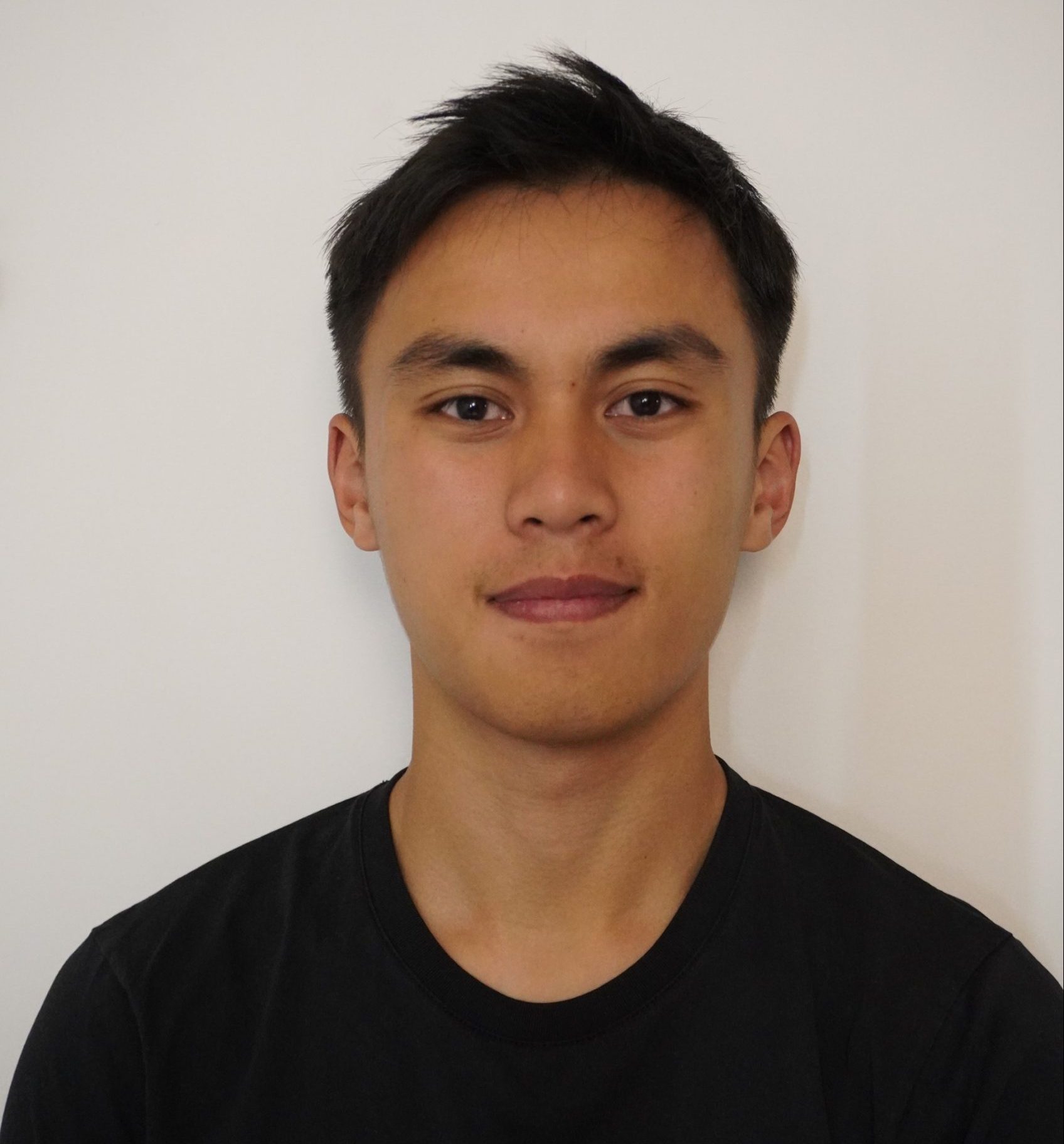
Quan Nguyen
The University of Melbourne
I am in my final year studying a Masters specialising in pure mathematics. I completed my undergraduate also at the University of Melbourne majoring in pure maths. My research interests are in the areas of topology and geometry. In particular, my research project supervised by Prof. Paul Norbury involves studying the moduli space of Riemann surfaces and their volumes. Outside of pure maths, I am also interested in statistics, data science and machine learning which are areas I aspire to pursue a career in.
Can you give me a quick rundown about the type of mathematics you are studying and its potential impacts for the broader community (think how you would explain your work and studies to others who don’t study maths)
My research area is on flat surfaces and their moduli space which have been extensively studied over the past few decades with many breakthroughs and advancements made in the field. It has deep connections to various areas of mathematics and physics which include Teichmuller theory, dynamical systems, algebraic geometry, ergodic theory and many others. Many problems in these fields lead us to studying flat surfaces which allows us to extract information using tools from geometry and topology. My project aims to calculate the Masur-Veech volumes in particular moduli spaces of flat surfaces which arise in problems related to billiards and interval exchange transformations. They are also related to Seigel-Veech constants that tell us information about closed geodesics, Teichmuller flow and dynamics.
How did you get into mathematics/statistics/data science? Was there someone or something that inspired you to this field?
I have always enjoyed maths and solving problems. I saw an Eddie woo video in year 9 and the rest was history.
You received a Travel Grant to attend AMSI Summer School 2025. How important was this in terms of your ability to attend, fully participate in the program and meet others studying in similar fields? Do you think it was an advantage to attend the program in-person?
The travel grant allowed me to travel interstate and fully engage in the program. Attending physically provided opportunities to connect and work with other like-minded students which would not have been possible without the travel grant and attending online. It also enabled me to participate in all of the events such as the careers day which were a valuable part of the experience.
What was the most valuable part of the program for you?
Meeting and working with like minded individuals and engaging with interesting mathematics alongside experts in the field.
In the long-term, what do you think are the benefits of having attended Summer School?
The exposure to interesting maths that is not commonly taught and many amazing people from around the country.
Summer School included a special Careers Day program which aims to help give students an idea of the kinds of career paths available to maths graduates in industry and private sector research areas. Do you feel better equipped to explore career options in the mathematical sciences after attending AMSI Summer School?
The careers day gave me further insights to the roles available to mathematics graduates outside of academia and provided many new career paths that I have not yet considered.
What advice would you give to someone who is considering applying for Summer School in 2026? Should they apply and why?
I highly recommend the summer school for postgraduate students studying mathematics given the wide and unique variety of subjects offered. It is an opportunity to gain exposure to interesting areas of mathematics, learn from and socialise with new people, and count a subject towards your degree.
What are your current career ambitions in the mathematical sciences sector?
I will either continue with further research and pursue a PhD, or go into industry to learn new skills in areas such as data science and statistics.