In

2027 AMSI-ANZIAM Lecture Tour
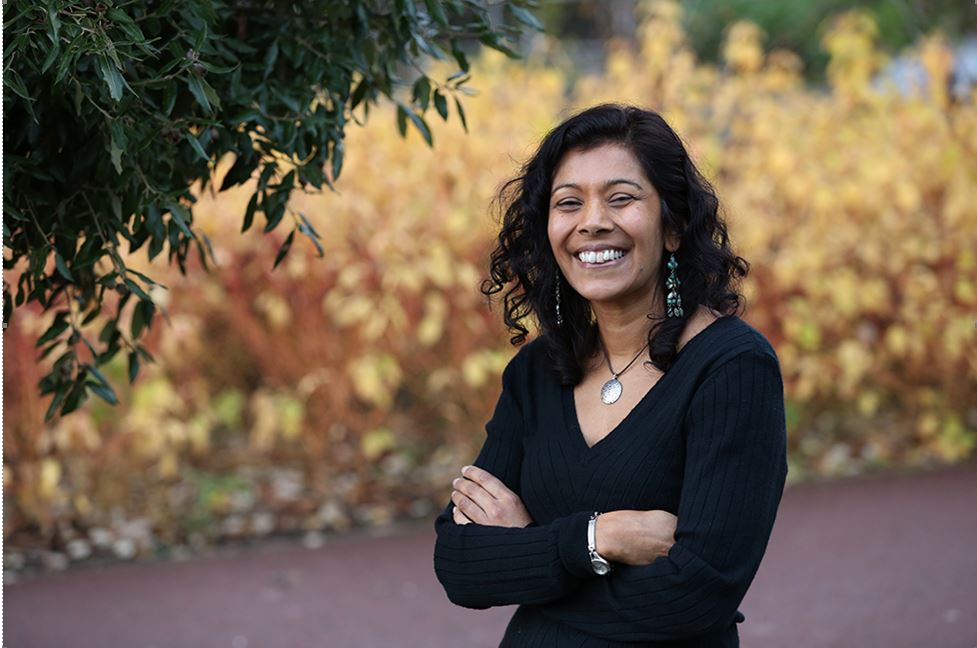
2027 ANZIAM Lecturer
The AMSI-ANZIAM Lecture Tour invites a distinguished international academic in an applied mathematical field to speak at universities across Australia after the conclusion of the ANZIAM conference. It includes a series of talks including specialist and public lectures. The tour is organised biennially by AMSI and is supported by ANZIAM.
Speaker
Professor Bindi Brook
Centre for Mathematical Medicine and Biology, University of Nottingham
Professor Bindi Brook is a Professor of Mathematical Medicine and Biology in the School of Mathematical Sciences at the University of Nottingham.
Her interest in applying mathematical models to biological problems began during her PhD at the University of Leeds, under the supervision of Professor Tim Pedley. Her doctoral research focused on blood flow in giraffe jugular veins, particularly flow–structure interactions in compliant vessels.
She subsequently undertook postdoctoral research at the University of Sheffield, modelling mechanically ventilated lungs and drug delivery within the airways. For more than 20 years, Professor Brook and her research group have developed integrative, multiscale mathematical models of respiratory biomechanics and mechanobiology.
Their work draws on a range of approaches, including discrete stochastic models of cell–matrix interactions, vertex-based cell and spring-network models, continuum fluid and soft-tissue mechanics, and multiphase models of tissue growth in airway remodelling.
The group aims to connect cellular-level processes with the structure, function and (patho)physiology of tissues. Its research has a particular focus on asthma and, more recently, destructive lung diseases such as chronic obstructive pulmonary disease.
Professor Brook works closely with biologists and clinicians to develop interdisciplinary models that improve understanding of the emergence and progression of respiratory disease, with the ultimate goal of predicting personalised disease trajectories for individual patients.
Schedule
Held biennially, the Lecture Tour brings a distinguished international academic in an applied mathematical field to universities across Australia following the ANZIAM Conference. The tour includes a program of specialist and public lectures, providing opportunities for researchers, students and the wider community to engage with leading international work in applied mathematics.
Prior to the lecture tour, Professor Bindi Brook will deliver a plenary talk at the ANZIAM Conference held in Auckland, NZ from 1-5 February 2027. The AMSI-ANZIAM lecture tour will be hosted in Australia from 8-19 February 2027.
This tour is organised by AMSI with the support of ANZIAM.
| DATE | TIME | TYPE | TITLE | HOST | VENUE/LOCATION | REGISTER |
|---|---|---|---|---|---|---|
| Wednesday 10 February | TBA, AEDT | Public Lecture | Can we predict the future of your lungs? (How mathematics, biology and medical imaging are helping us understand, predict and treat lung disease.) | RMIT & The University of Melbourne | TBA | |
| Thursday 11 February | 3pm - 4pm AEDT (light refreshments afterwards) | Colloquium | The tug of war between biology and mechanics: multiscale modelling of respiratory disease | Monash University | Room 340, 9 Rainforest Walk, Clayton campus, Monash University | |
| Monday 15 February | TBA, AEDT | Colloquium (hosted online) | The tug of war between biology and mechanics: multiscale modelling of respiratory disease | The University of New England | Online | |
| Monday 15 February | TBA, AEST | Public Lecture | Can we predict the future of your lungs? (How mathematics, biology and medical imaging are helping us understand, predict and treat lung disease.) | The University of Queensland & Queensland University of Technology | TBA | |
| Wednesday 17 February | TBA, ACDT | Colloquium | The tug of war between biology and mechanics: multiscale modelling of respiratory disease | Adelaide University | TBA | |
| Friday 19 February | TBA, AWST | Colloquium | The tug of war between biology and mechanics: multiscale modelling of respiratory disease | University of Western Australia | TBA |
Talk abstract
Can we predict the future of your lungs?
How mathematics, biology and medical imaging are helping us understand, predict and treat lung disease.
Why does lung disease develop in some people and not others? Why does it progress rapidly in one person but remain stable in another? And can we predict what will happen next?
Advances in medical imaging, biological measurement and artificial intelligence are giving us unprecedented amounts of information about the lung. But identifying patterns in data is only part of the challenge. If we want to understand how disease will evolve, and how it might respond to treatment, we also need to uncover the mechanisms driving those changes.
Mathematics provides a powerful way to do this. By translating our understanding of lung biology, mechanics, and physics into equations and computational models, we can explore how processes operating at scales from individual cells to the whole lung interact over time. Combined with patient data, these models may ultimately allow us to build personalised “digital twins”: virtual representations of an individual that can be used to explore possible futures and test the effects of different treatments in a computer.
In this lecture, we will journey inside the lung to discover how mathematics can help us understand what drives lung disease, explore how it may progress, and ultimately ask whether one day we really will be able to predict the future of your lungs.
The tug of war between biology and mechanics: multiscale modelling of respiratory disease
Respiratory disease emerges from interactions that span a remarkable range of spatial and temporal scales, from molecular processes within individual cells to tissue deformation and whole-organ function. A particular challenge is that biology and mechanics are not simply coupled in one direction: biological processes alter the mechanical environment in the lung, while mechanical forces in turn regulate cell behaviour, tissue structure and disease progression. Mathematical modelling provides a way to integrate these interactions and explore mechanisms that are difficult to isolate experimentally.
In this talk, I will use three examples to illustrate how multiscale mechanistic models can be used to investigate respiratory disease. First, I will consider acute bronchoconstriction in asthma, where models of airway smooth-muscle crossbridge cycling are coupled to airway-wall and surrounding-tissue mechanics to examine how molecular-scale contractile dynamics are translated into airway narrowing. Second, I will turn to the much slower process of airway remodelling, integrating biological regulation of cell and extracellular-matrix turnover with tissue mechanics to explore the maintenance of airway-wall homeostasis, its disruption in asthma, and the emergence of persistent wall thickening. Finally, I will consider tissue destruction in emphysema and lymphangioleiomyomatosis (LAM), coupling models of protease-mediated extracellular-matrix degradation to mechanical spring networks. These models allow us to investigate how continuous cyclic loading during breathing interacts with progressive loss of elastin and collagen to drive the spatial evolution of tissue damage.
Across these examples, a common theme is that disease cannot always be understood by considering biological signalling or tissue mechanics in isolation. I will discuss how mathematical models can act as a bridge between scales, helping to identify feedback mechanisms, test competing hypotheses and reveal how relatively local changes in cell behaviour or matrix composition can ultimately alter organ-level function.
Previous AMSI-ANZIAM Lecturers
- 2025: Professor Sunghwan Jung, Department of Biological and Environmental Engineering, Cornell University
- 2023: Professor Konstantin Avrachenkov, National Institute for Research in Digital Science and Technology (INRIA)
- 2021: Dr Cecile Viboud, Fogarty International Center, National Institute of Health
- 2017: Associate Professor Maria Vlasiou, Eindhoven University of Technology
- 2015: Professor Michael Shelley, Applied Mathematics Laboratory, The Courant Institute of Mathematical Sciences, New York University
- 2013: Professor Stephen Boyd, Stanford University
- 2011: Professor Darren Crowdy, Imperial College London
- 2008: Professor Linda Petzold, University of California, Santa Barbara
- 2006: Professor John E. Dennis Jr, Rice University